Loading...

What is Volume Profile?
Definition
Volume Profile (VP) is a market analysis tool used to visualize where trading activity has occurred across different price levels. It organizes traded volume horizontally by price, rather than over time, revealing where the market has facilitated the most and least amount of trade. Volume Profile is not a trading strategy, but a structural framework for identifying value, balance, and participation within the auction.
Volume represents the number of contracts or shares exchanged between buyers and sellers during a given period. In equity markets, volume reflects the number of shares traded, while in futures and options markets, volume is measured by the number of contracts traded. By aggregating this volume at each price level, Volume Profile highlights areas of strong agreement between participants as well as prices that were quickly rejected.
From this perspective, high-volume price levels indicate areas of fair value, whereas low-volume areas reflect reduced participation and directional movement. Volume Profile therefore provides objective insight into how the auction has unfolded and how price is likely to behave when revisiting these levels.
Volume Profile Components
Overview
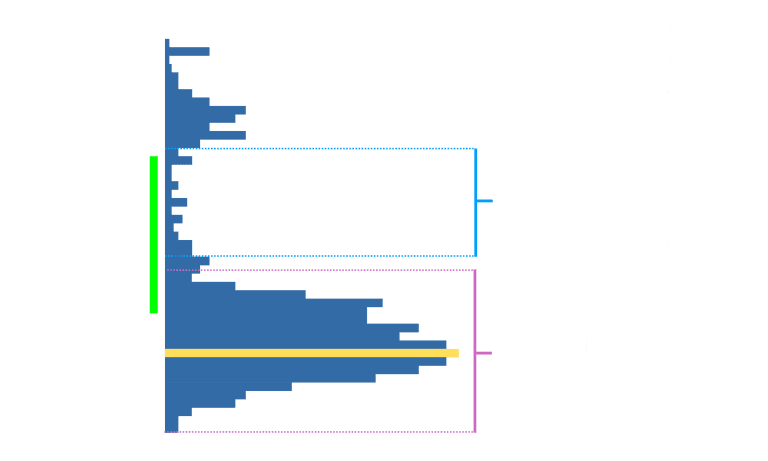
Volume Profile Overview • Source: jumpstarttrading.com
The illustration above shows an example of a Volume Profile. It’s important to note that not all Volume Profiles will appear identical, as their shape varies with market conditions. This example is provided for illustrative purposes and represents a classic Volume Profile structure. In the following sections, we will examine each of its components in detail.
Value Area
Volume Profile Value Area • Source: orderflw.com
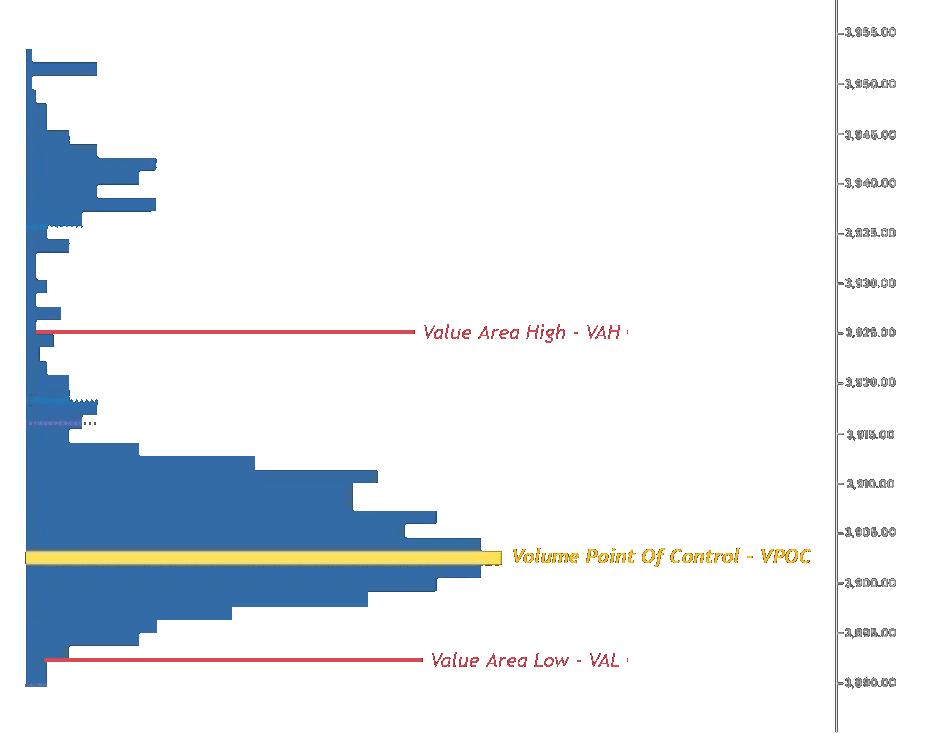
The Value Area represents the range of prices where the majority of trading activity has occurred during a given session. It reflects the zone in which buyers and sellers were most willing to transact, indicating broad agreement on price and efficient trade facilitation. When price remains within this area, market activity is typically rotational rather than directional.
Within the Market Profile and Volume Profile framework, the value area is commonly defined as the range that contains approximately 70% of the session’s total traded volume. At the center of this range is the Point of Control (POC), which marks the price level with the highest concentration of volume and serves as the market’s primary reference for value during that period.
The upper boundary of the value area is known as the Value Area High (VAH), while the lower boundary is the Value Area Low (VAL). These levels define the extremes of accepted price for the session and often act as important reference points. When price approaches VAH or VAL, the market is testing the limits of acceptance and may either rotate back toward the POC or transition into imbalance.
Prices that trade outside the value area reflect levels of reduced participation, where the market has not spent sufficient time facilitating trade.
High Volume Node
High Volume Node • Source: orderflw.com
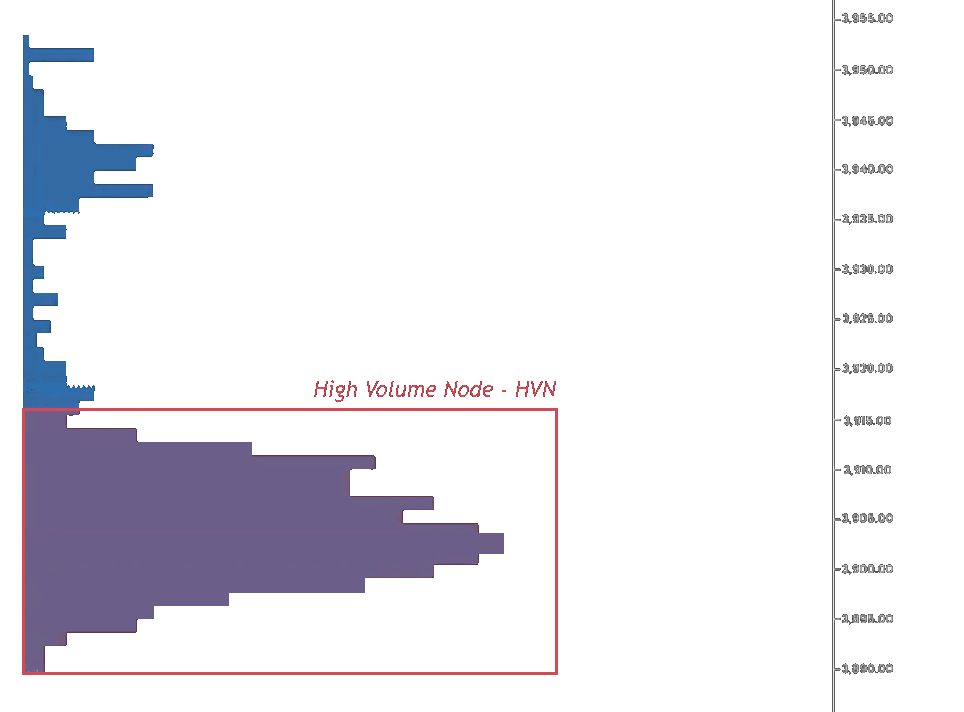
High Volume Nodes (HVNs) are price areas where a significant amount of volume has been traded, indicating strong agreement between buyers and sellers. Each HVN represents a prior area of value and contains its own Point of Control (POC), which marks the price level where the most volume within that node was transacted.
When price is trading inside an HVN, the market is typically in balance and efficiently facilitating trade. The upper and lower extremes of an HVN are especially important, as they define the limits of acceptance or rejection for that value area. From an Auction Market Theory perspective, these extremes often present high-quality decision points.
The usual Auction Market theory scenarios apply here.
Low Volume Node
Low Volume Node • Source: orderflw.com
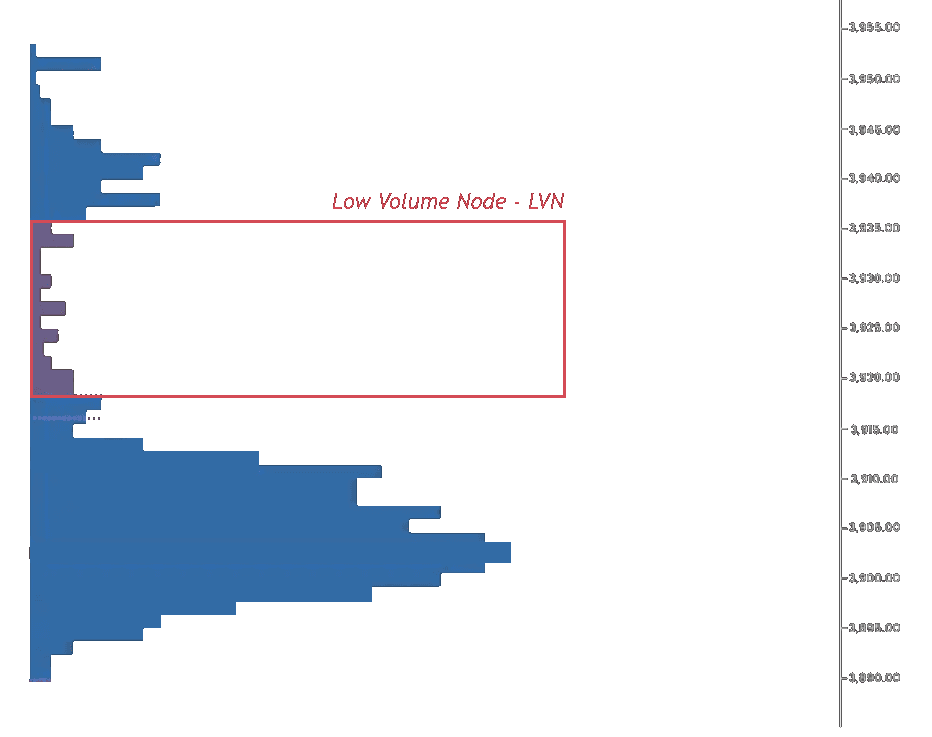
Low Volume Nodes (LVNs) are price areas where relatively little volume has been traded, indicating limited agreement between buyers and sellers. Each LVN represents a zone where the market moved through price quickly, spending minimal time facilitating trade due to a lack of acceptance.
When price enters an LVN, the market is typically in an imbalanced state. Because participation was previously low, these areas offer little structural support or resistance. As a result, price often either rejects the level quickly or travels through the LVN rapidly until it reaches an area of higher participation.
From an Auction Market Theory perspective, LVNs highlight inefficient auctions and often act as transition zones between areas of value. The usual AMT scenarios apply here as well, with price either continuing directionally through the LVN or reacting sharply if participation suddenly returns.
Shelf and Ledge
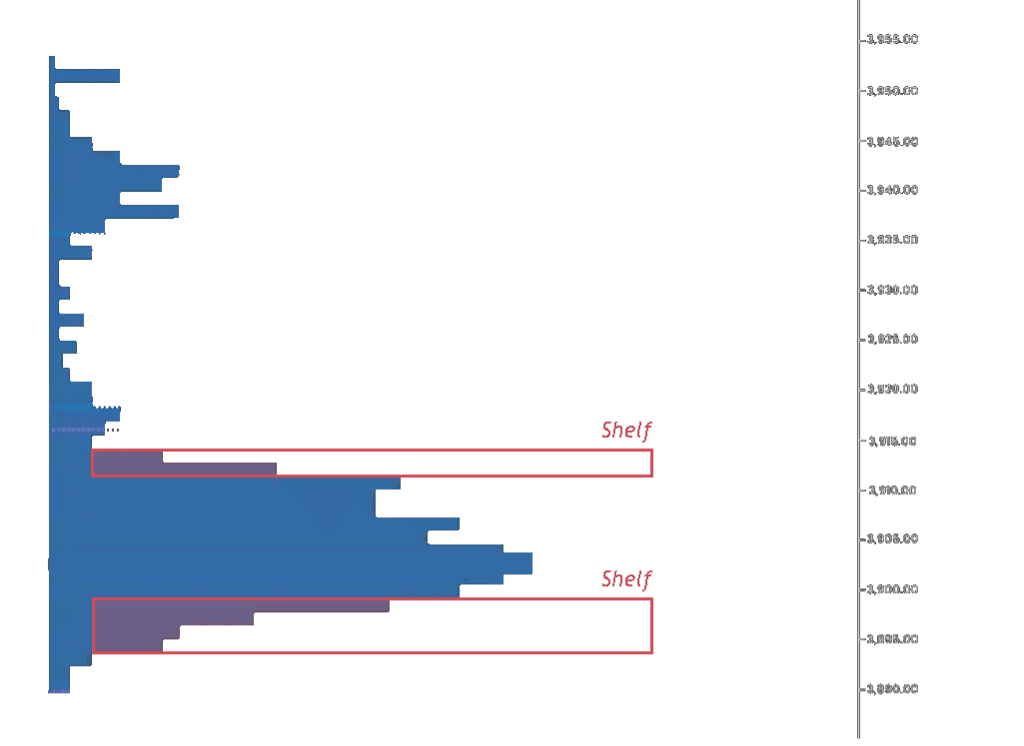
Volume Profile Shelf • Source: orderflw.com
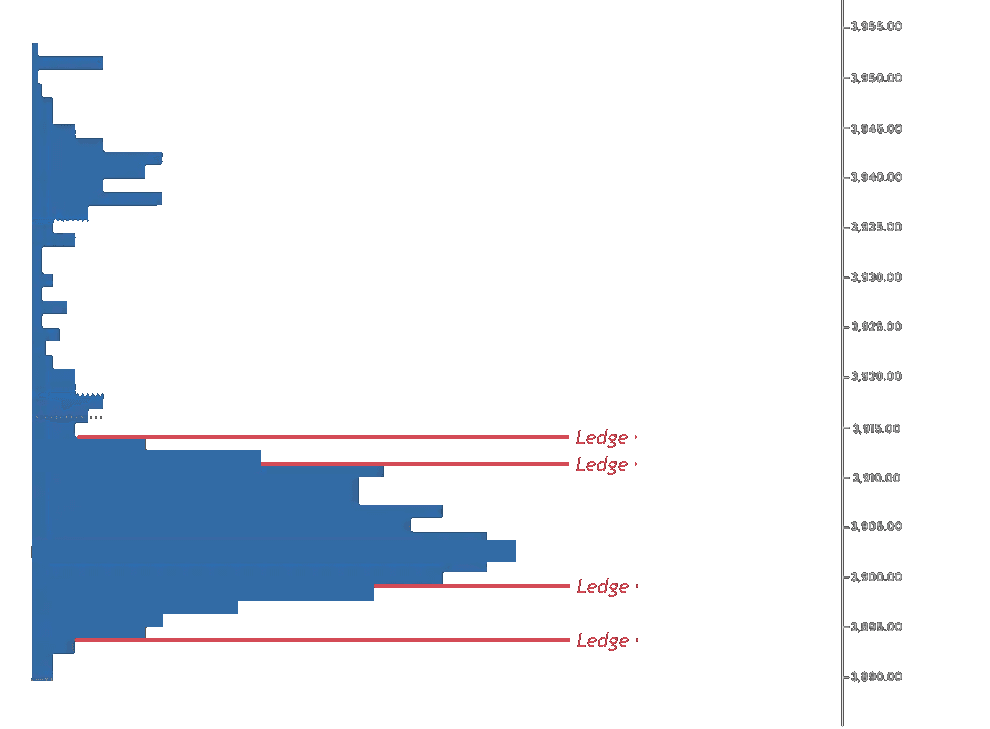
Volume Profile Ledge • Source: orderflw.com
The points where volume begins to rise or fall off aggressively are significant in the auction. Volume Profile makes these transitions visible by showing where participation increased or decreased sharply across price levels. These shifts often mark areas that may influence future price behavior.
A shelf is a price area where volume expands and stabilizes, indicating increased acceptance and trade facilitation. These areas often represent established value and can act as zones where price slows or rotates when revisited.
The ledges are simply the outer edges of shelves, where volume drops off quickly. There is no functional difference between shelves and ledges; ledges are the boundaries of the shelf where acceptance transitions into rejection.
Volume Profile Placement Methods
Composite Profiles
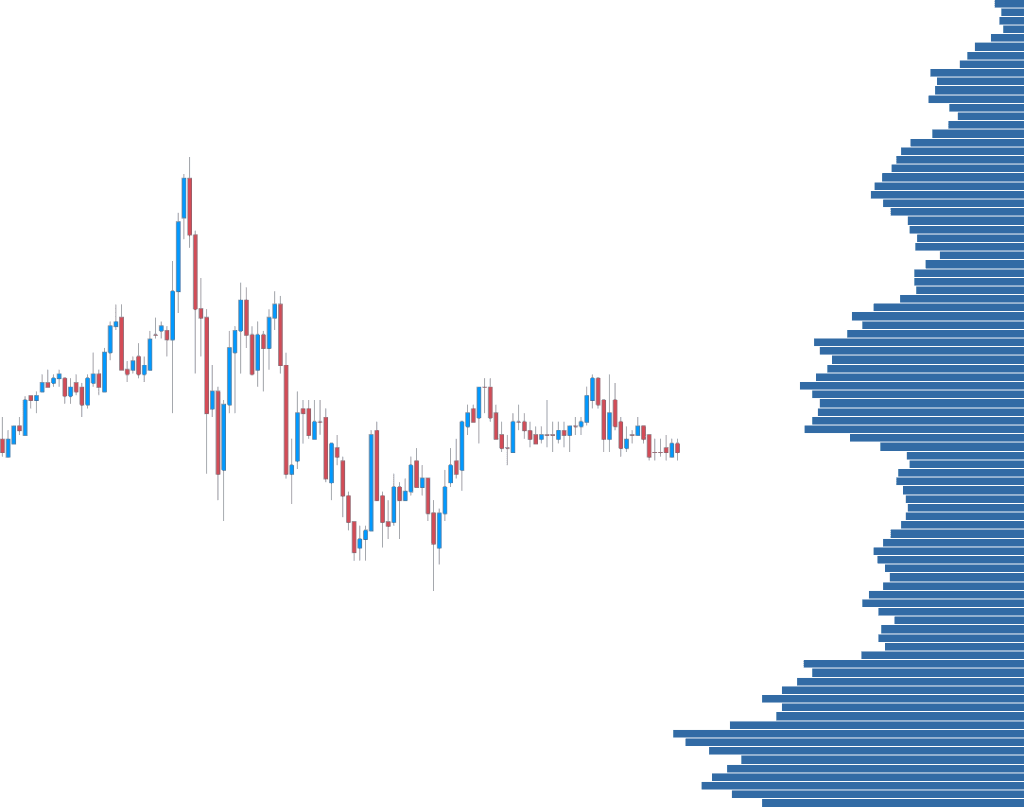
90-Day Volume Profile • Source: orderflw.com
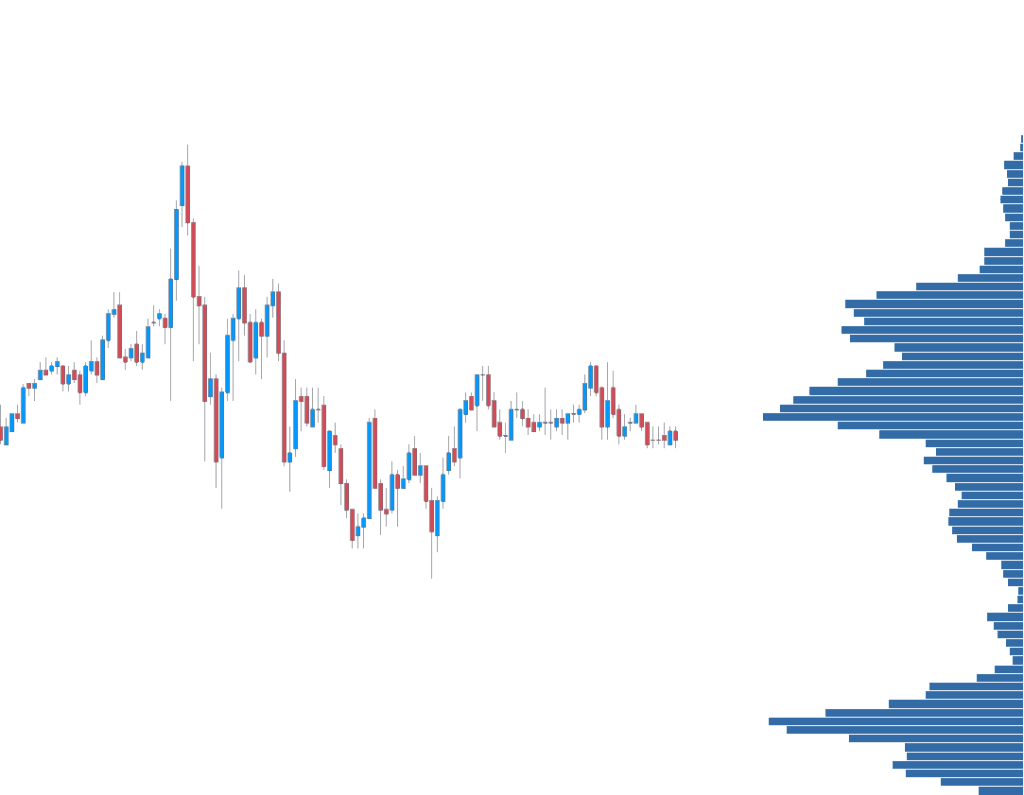
7-Day Volume Profile • Source: orderflw.com
A Composite Volume Profile aggregates volume data across multiple trading sessions into a single profile. Rather than focusing on one session or a fixed intraday range, composite profiles provide a broader structural view of where participation has developed over time. This makes them particularly useful for identifying longer-term areas of balance and imbalance.
By combining multiple days into one profile, composite profiles smooth out short-term noise and highlight price levels that have consistently attracted trading activity. These levels often serve as important references for market participants and can influence price behavior when revisited.
Commonly used composite periods include 5-day, 7-day, 30-day, 90-day, 180-day, and 365-day profiles. Shorter composites tend to reflect recent market structure, while longer composites capture broader, more established value areas. The choice of composite length depends on the timeframe and context being analyzed.
Session Profiles
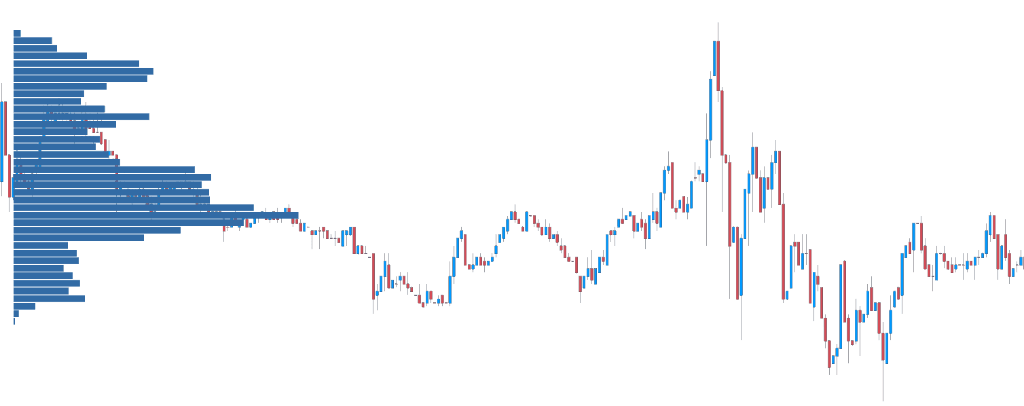
Overnight Volume Profile • Source: orderflw.com
Session Volume Profiles organize traded volume within clearly defined trading sessions, allowing the auction to be analyzed in its natural temporal structure. By separating volume by session, these profiles highlight how participation and value develop across different phases of the trading day.
Commonly used sessions include the Overnight (ON) session and the Regular Trading Hours (RTH) session. Each session reflects distinct participant behavior. Overnight profiles represent price action from 18:00 to 09:30. RTH profiles represent price action from 09:30 to 16:00.
In addition to current sessions, prior session profiles are frequently referenced, including the previous day, week, and month. These historical session profiles provide important structural context by identifying where value was previously established and where participation was accepted or rejected.
Session Volume Profiles are particularly effective for tracking day-to-day changes in market structure, comparing developing value across sessions, and identifying key reference levels such as prior session POCs, value areas, and extremes. When price revisits these levels, the market is often responding to previously established agreement.
Volume Footprint
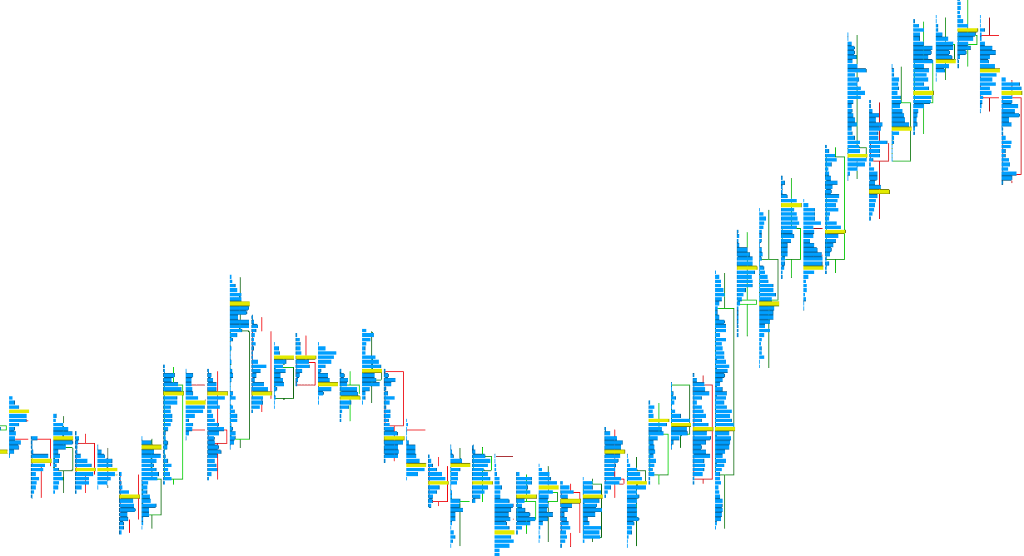
Volume Footprint • Source: jumpstarttrading.com
The Volume Footprint, also referred to as Candlestick Volume Profile, visualizes traded volume directly within each individual candle. Instead of viewing a candlestick as a blank representation of price movement, footprint charts reveal how volume was distributed at each price level as the auction unfolded.
Each footprint candle shows where transactions occurred as price traded higher and lower during that interval. This provides direct insight into what actually happened inside the candle, including areas of concentrated participation, aggressive buying or selling, and price levels that attracted or rejected volume.
Volume Footprint charts are commonly used across multiple timeframes. On higher timeframes, they help identify opportunity zones and structural acceptance. On lower timeframes, they are frequently used for execution and short-term decision-making, as they expose shifts in orderflow with greater precision.
YouTube Videos
Volume Profile Trading Strategy
The Secret to Trading Volume Profiles
Track Smart Money with Volume Profile
Interactive: Volume Profile Anatomy
Click the buttons below the chart to learn what each component represents.
Click a button below the chart to see its description.
Test Your Knowledge
1 / 5What does Volume Profile organize?