Loading...

01 What is Time Price Oppurtunity?
Definition
Time Price Opportunity (TPO), also referred to as Market Profile, is a market analysis tool used to visualize how long price is accepted at different levels throughout a trading session. It organizes price activity horizontally by time spent at each price, rather than by traded volume, revealing where the market has spent the most and least time facilitating trade. TPO is not a trading strategy, but a structural framework for identifying value, balance, and participation within the auction.
TPO represents the number of time periods (typically letters or blocks) that price trades at a given level during a session. These time periods are most commonly based on 30 minute intervals, with each bracket representing one segment of the session. Each occurrence reflects that the market revisited and accepted that price for a period of time. By aggregating these time-based observations, TPO highlights areas where the market found sustained agreement, as well as prices that were quickly rejected.
From this perspective, price levels with a high concentration of TPO brackets indicate areas of acceptance and fair value (balance), whereas low TPO areas reflect rejection and directional movement (imbalance). TPO therefore provides objective insight into how the auction has developed over time and how price is likely to behave when revisiting these levels.
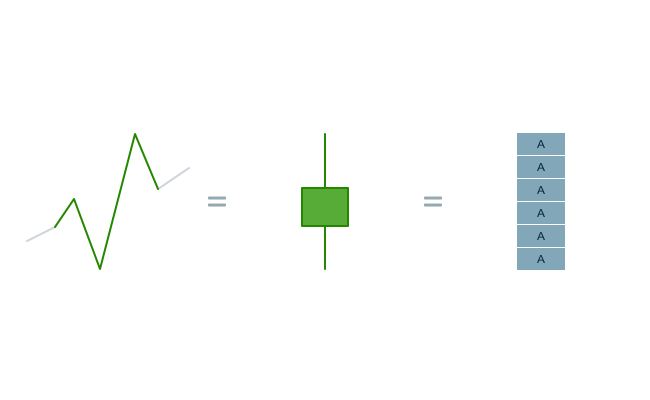
Market Profile Definition • Source: prorealtime.com
Historical Context
TPO was originally developed by J. Peter Steidlmayer in collaboration with the Chicago Board of Trade (CBOT) in the 1980s. It was designed to provide a structural view of the market that goes beyond simple price charts by showing how value develops throughout a session. The resulting profile organizes price activity into time based increments, creating a visual distribution.
How TPO is Constructed
A TPO chart divides the trading session into equal time intervals, typically 30 minutes each. Each interval is assigned a letter (A, B, C, etc.), and every price traded during that period is marked with that letter.
As the session develops, these letters stack horizontally at each price level, forming a profile that shows how often price was visited. Levels with many letters indicate sustained acceptance, while those with few letters reflect brief rejection.
Because TPO is time based, the number of prints directly reflects how long the market accepted a price. This distinction between extended acceptance and quick rejection forms the foundation of TPO analysis.
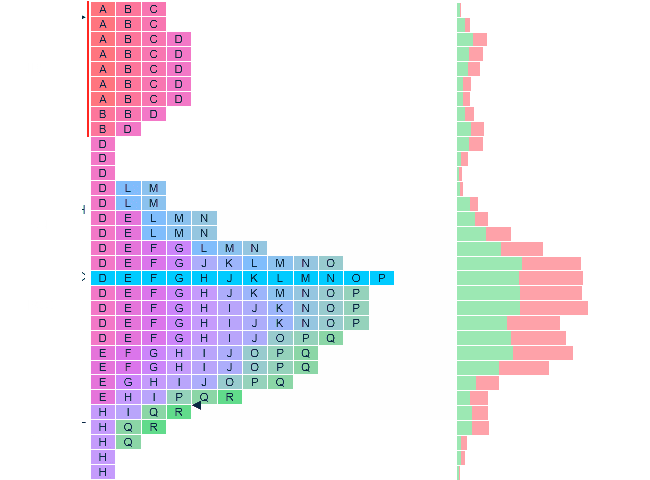
Market Profile Construction • Source: prorealtime.com
02 Market Profile Components
Overview
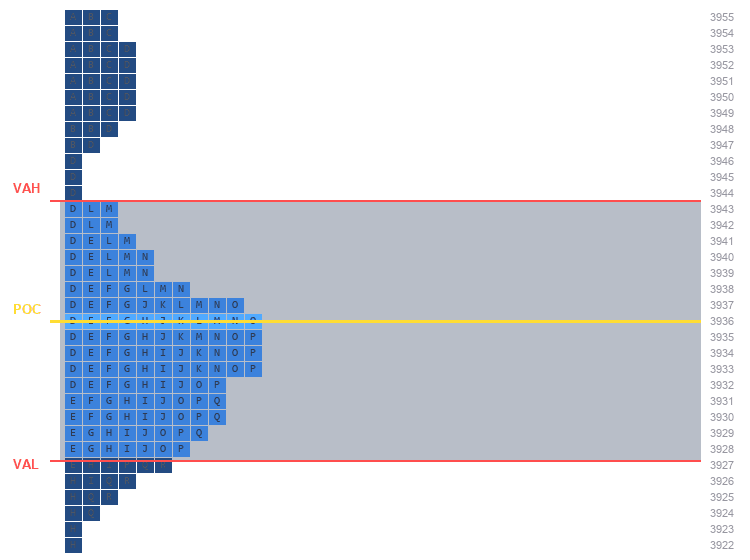
Market Profile Overview • Source: prorealtime.com
The illustration above shows an example of a Market Profile (TPO). It's important to note that not all Market Profiles will look the same, as their structure changes depending on market conditions. This example is for illustrative purposes and reflects a classic TPO distribution. In the following sections, we will break down each of its components in detail.
Value Area
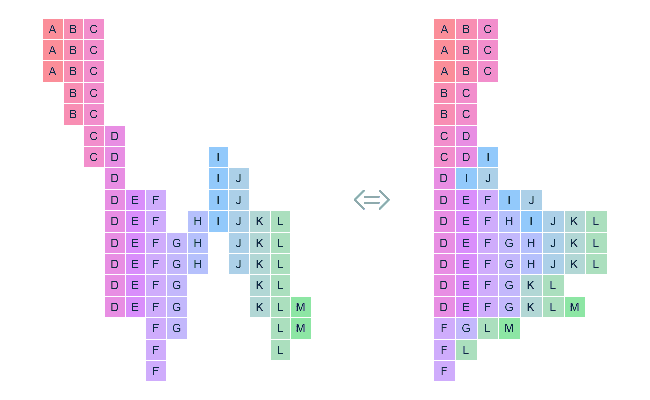
TPO Value Area • Source: orderflw.com
The Value Area represents the range of prices where the majority of trading activity has occurred during a given session. It reflects the zone in which buyers and sellers were most willing to transact, indicating broad agreement on price and efficient trade facilitation. When price remains within this area, market activity is typically rotational rather than directional.
Within the Market Profile and Volume Profile framework, the value area is commonly defined as the range that contains approximately 70% of the session's total traded volume. At the center of this range is the Point of Control (POC), which marks the price level with the highest concentration of volume and serves as the market's primary reference for value during that period.
The upper boundary of the value area is known as the Value Area High (VAH), while the lower boundary is the Value Area Low (VAL). These levels define the extremes of accepted price for the session and often act as important reference points. When price approaches VAH or VAL, the market is testing the limits of acceptance and may either rotate back toward the POC or transition into imbalance.
Prices that trade outside the value area reflect levels of reduced participation, where the market has not spent sufficient time facilitating trade.
Initial Balance
TPO Initial Balance • Source: orderflw.com
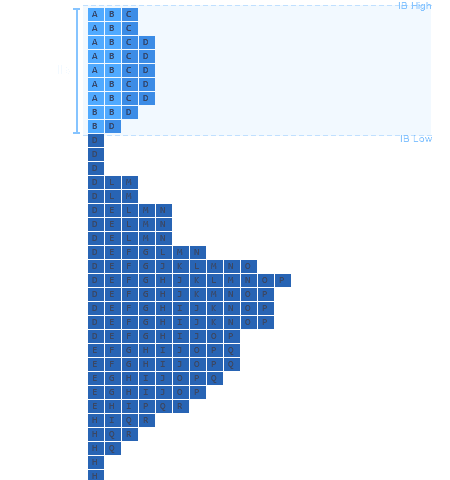
The Initial Balance (IB) corresponds to the first two periods of the profile (letters A and B), generally representing the first trading hour of the session. It identifies the price range established immediately after the market opens and reflects the earliest negotiation between buyers and sellers.
Single Prints
TPO Single Prints & Excess • Source: orderflw.com
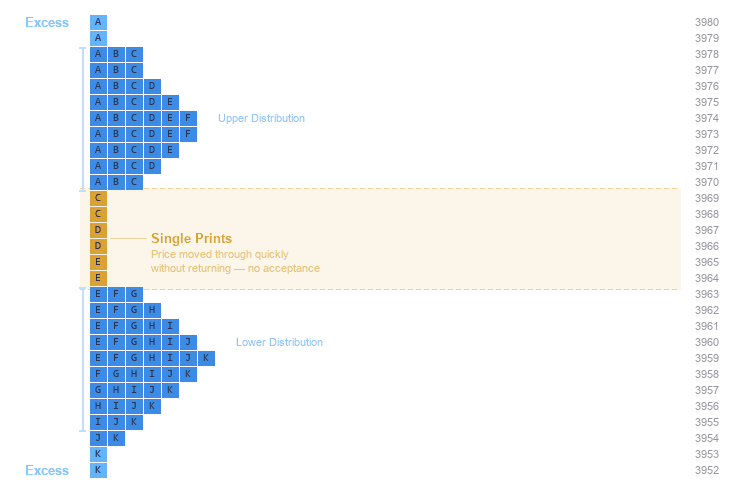
Single prints are price levels where only one TPO letter appears in the profile. They represent areas where the market moved through price quickly without returning, indicating a lack of acceptance and rapid directional movement. Single prints are the TPO equivalent of Low Volume Nodes in Volume Profile.
Single prints often form during initiative activity, where aggressive buying or selling drives price through levels without allowing the market to build time. Because these levels were not accepted, single prints frequently act as areas of fast price movement when revisited. The market tends to either reject the area quickly or pass through it again with similar speed.
From an Auction Market Theory perspective, single prints represent inefficient auctions where the market moved through price without facilitating meaningful two-sided trade. When the auction later revisits these levels, the response provides valuable information about whether the market now accepts or continues to reject these prices.
In the illustration, the two distributions represent distinct zones of agreement where the market spent considerable time and facilitated trade across multiple periods. The single prints connecting them represent the initiative move that bridged one area of acceptance to another. This structure is characteristic of a Double Distribution Day, where balance is disrupted, price moves rapidly through a series of levels, and balance is re-established at a new price area.
Because single prints mark areas of minimal participation, they serve as important reference levels. When the market revisits a zone of single prints, the speed and character of the response reveal whether acceptance is developing or whether the market continues to treat those prices as areas of rejection.
Excess
TPO Single Prints & Excess • Source: orderflw.com
The extremes of a TPO profile provide important information about how the auction concluded at its boundaries.
Excess occurs when the market reaches an extreme and is met with strong opposing participation, creating a sharp rejection. On a TPO profile, excess appears as a tail of two or more consecutive levels where only one period traded before the market reversed at the very top or bottom of the profile . Excess signals a clean completion of the auction in that direction and suggests that the market found a definitive boundary.
From an Auction Market Theory perspective, these levels often mark areas where mean reversion becomes likely, particularly when the prior session's profile was balanced and the market is expected to remain within or return to value.
Poor Highs & Poor Lows
TPO Poor Highs & Poor Lows • Source: orderflw.com
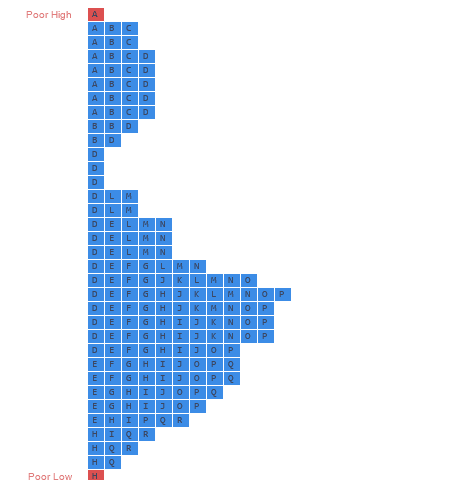
A poor high or poor low occurs when only a single TPO period appears at the extreme of the profile. This means the market briefly touched that price level once and moved away without generating a meaningful rejection. Unlike excess, where two or more single prints form a clear tail indicating strong opposing activity, a poor extreme reflects a weak or absent response.
Because the auction was not firmly rejected at that level, the market is likely to return and retest it. Poor highs and lows represent unfinished business and can be used as directional context or as draw on liquidity levels. On a candlestick chart, they often correspond to relative equal highs or relative equal lows.
The distinction matters for anticipating future behavior. Excess at an extreme signals a completed auction where a revisit is less probable. A poor high or poor low signals that the auction stopped without conviction, increasing the probability that price will return to that level in a future session.
Unfinished Auction
TPO Unfinished Auction • Source: orderflw.com
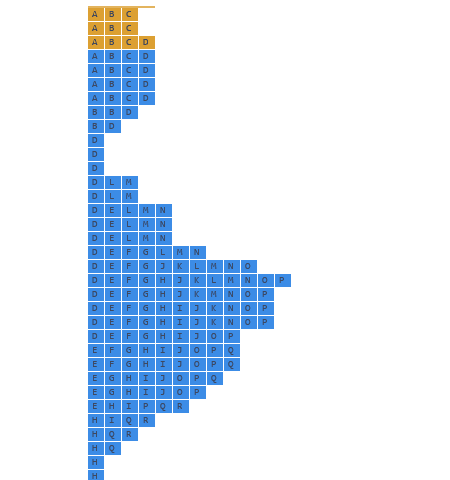
An unfinished auction (UFA) occurs when two or more TPO periods reach the exact same price at the extreme of the profile, creating a flat, aligned edge. This structure indicates that the market tested a level multiple times across different periods but failed to break through, and no clean rejection occurred to complete the auction.
Because the auction was left incomplete, price has a tendency to return to these levels. The market left unresolved business at that price, and when conditions allow, it will often retrace to sweep through the level and finish what it started. On a candlestick chart, unfinished auctions appear as equal highs or equal lows.
03 Market Profile Configurations
Session TPO's
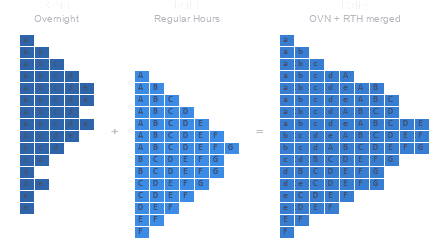
Session TPO's • Source: orderflw.com
TPO profiles can be configured to display different session scopes depending on what part of the trading day is being analyzed. The most common configurations are Overnight (OVN), Regular Trading Hours (RTH), and Daily.
An Overnight profile captures activity that occurs outside of regular trading hours, typically during the electronic session between the prior close and the next day's open. OVN profiles provide context for how price has been positioned before the regular session begins and often establish early reference levels.
A Regular Trading Hours profile captures activity during the main session, where participation and volume are typically highest. RTH profiles are the most widely used for intraday analysis because they reflect the period of greatest market engagement.
A Daily profile merges the overnight and regular sessions into a single composite, providing a complete view of all activity within a 24-hour period. This broader scope is useful for understanding overall market structure without separating sessions.
Beyond these, profiles can also be configured on weekly, monthly, or yearly timeframes. Longer timeframes aggregate more data and reveal higher-level areas of acceptance and rejection that may not be visible on a single session.
Merging TPO's
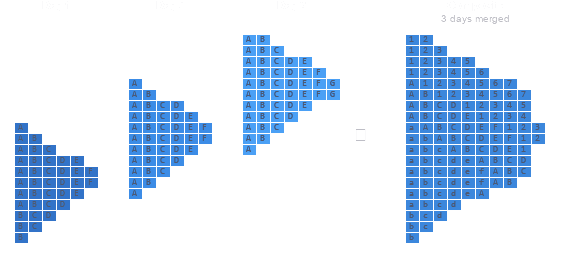
Merging TPO's • Source: orderflw.com
Merging TPO profiles combines multiple sessions into a single composite, creating a broader view of how the market has developed over time. Rather than analyzing each session in isolation, a merged profile aggregates all activity across the selected range and reveals the combined structure of acceptance and rejection.
The most common use of merging is combining consecutive sessions to identify multi-day balance areas. When several sessions trade within overlapping price ranges, merging them produces a wider, more defined profile that highlights where the market has spent the most time and where value has formed across multiple days. The resulting value area and point of control represent a higher-timeframe consensus of fair value.
Merging is also useful for identifying structural features that are not visible on individual profiles. A single session may appear directional, but when merged with adjacent sessions, it may reveal that the market is rotating within a larger balance area. Conversely, merging can confirm that separate sessions are building distinct, non-overlapping value areas, indicating a sustained directional move.
04 Overnight Inventory
Overnight inventory refers to the positioning of the overnight session relative to the prior day's settlement. The settle price is established at 16:15, 45 minutes before the regular session close, and serves as the reference point for measuring overnight positioning. If the overnight session traded above the settle, the inventory is long. If it traded below the settle, the inventory is short. If it traded around the settle or corrected itself within the session, the inventory is considered neutral.
The degree of overnight inventory matters. A session that traded entirely on one side of the settle is classified as 100% long or 100% short, while a session where only the majority traded on one side is considered slightly long or slightly short. A 100% long or short inventory carries a stronger signal and is more likely to be corrected than a slight imbalance.
Approximately 70% of the time, the RTH open produces a counter-auction relative to overnight inventory. If overnight inventory is long, the market tends to trade lower after the open. If overnight inventory is short, the market tends to trade higher.
This happens because overnight participants are generally weaker hands. Liquidity during the electronic session is lower, and the traders active during these hours are typically not institutional participants with large, committed positions. When the regular session opens and liquidity increases, these overnight positions are often liquidated quickly. The aggressive activity at the open is not new money entering the market but rather old overnight business being unwound.
If overnight inventory is long and the market does not correct lower after the open but instead continues higher, this is a sign of genuine strength. The overnight positioning was validated by new participation rather than being unwound. The same applies in reverse: if overnight inventory is short and the market continues lower without correcting, it signals genuine weakness.
Scenarios where overnight inventory tends to follow through rather than correct include directionally strong overnight sessions with clear conviction, gaps that hold, and high confidence from the open in the same direction as the overnight inventory. When value is directionally clear and the prior session closed strong in one direction, overnight follow-through becomes more likely.
For more examples, check discord.gg/dataprocess
05 Youtube Videos
Interactive: Market Profile (TPO) Anatomy
Click the buttons below the chart to explore each component of the TPO profile.
Click a button below the chart to see its description.
Test Your Knowledge
1 / 5What does TPO measure that Volume Profile does not?